Friday, October 28, 2022

Bumps in the Night - A Monster of the Week Review


Evil Hat Games

Monster of the Week

Published by Evil Hat Productions (Revised Edition 2015)

Written by Michael Sands

Licensed roleplaying games are bigger than ever, with even confined, main character-driven settings like Cowyboy Bebop and Blade Runner getting official systems. Avatar: Legends, based on the beloved, element-bending, had a record-breaking 10 million dollar Kickstarter.

But that doesn't mean every licensed RPG is a winner - the negative response to the recent Power Rangers shows us the limits of this trend. And even the best ones still leave game masters and players acting out adventures that often feel like a sideshow to the property's main story. I've played, enjoyed, and written plenty about licensed games but that's something always in the back of my mind. So what if you want to capture the atmosphere of a specific story but let the players take more of a role in the world?

That's where games like Monster of the Week come in. The book is very open about its influences,  actively promoting itself as being in the vein of Buffy the Vampire Slayer, X-Files, Supernatural, and those shows' creature-killing ilk. Using Powered by the Apocalypse for the mechanics, Monster of the Week shows the benefits of emulating an entire genre rather than a specific setting.

Evil Hat Games
The book puts the emphasis on getting right into play, broken up into digestible sections tailored to how quickly the table wants to get into a game. Even then, some more involved info is given for long term campaigns. Keepers are provided a wide range of support, like example monsters, mechanics for running story arcs, and advice on crafting a satisfying mystery. 

Some of this advice isn't specific to Monster of the Week but that's what makes it effective direction and plays to the overall ethos of PBtA - you're not playing

Wednesday, September 21, 2022

An interview with writer Alec Worley on his work with Warhammer, comics, and more


Alec Worley has written a number of stories for Warhammer publishing house Black Library and comic anthology 2000 AD. He's agreed to answer a few questions for the Tabletop Lair on exploring the other sides of Grimdark futures, his first creator owned comic, John Carpenter movies, what games he's been playing, and getting published.

The Tabletop Lair: When did you realize that you wanted to be a writer? Were there any pieces of media that were particularly influential?


Alec Worley: I always had comics and books as a kid, but it was Steve Jackson and Ian Livingstone’s Fighting Fantasy gamebooks that really snagged me as a reader. As a writer too! I think maybe it was that sense of telling a story that plays out as a result of choices made by the main character. That main character being me, the reader! I started writing my own gamebooks soon after, full of Hammer horror and illustrations copied out of comic books.

I got into RPGs soon after and got my hands on West End Games’ Ghostbusters at one point. I only played it once, I think. I had no idea how to run a comedy adventure without things going completely off the rails. Plus, all my players wanted to do was blast civilians in the face with an unlicensed nuclear accelerator!

Anyway, there was a section in the Ghostmaster’s Guide that broke down exactly how adventures work. The main character has an objective. There are obstacles in the way of that objective, etc. I distinctly remember that section being my first step into understanding how storytelling works.

I always wanted to do something creative for a living, but I was raised working class and was never quite sure how that might be a realistic option. I lasted exactly a month at College and had to take on a paper-round to afford the bus fare every day. I wanted to work in film, even more so when I discovered Quentin Tarantino. But I was on the dole, had no qualifications, and was terrified that I’d completely messed up my life!

I muddled through from there, working as a projectionist in London’s West End for several years while figuring out not only how to write, but to write for a living. Another thing I’m still figuring out to this day!


TTL: In addition to your original works, you’ve written for some beloved universes: Warhammer, Star Wars, Judge Dredd. How do you go about handling characters and settings that many of us have grown up with?

Black Library
AW: Lots of research! I’ll read as much as time and my sanity will allow. I have to understand how the world works and have some kind of critical read on the whole thing. But I also need to get a handle on the emotional appeal that universe has not just for me, but for every other fan.

In doing all this I’m always looking for unexplored angles, or interesting responses a character might have to a particular bit of lore. My Sisters of Battle stories featuring Sister Adamanthea came about from me wondering what would happen if a Repentia actually survived her penance? Would she be revered as some kind of saint? Would she even want to be forgiven? I love going into the pathology of these characters. There are few people in the 40k universe who aren’t completely crazy!

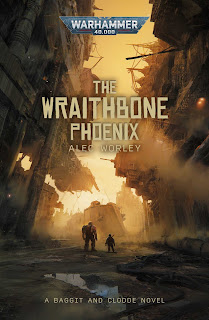
Baggit and Clodde in Dredge Runners and The Wraithbone Phoenix came about from me wondering how an irreverent Three Kings-type military caper might work in 40k. But then the Warhammer Crime series came up and those two characters were just a perfect fit! What’s given me so much mileage with these guys is asking what might it be like for two abhumans to exist in the Imperium, within a society that despises them?


TTL: On the subject of Black Library’s Crime and Horror imprints, what sets these apart from the “power armour and boltgun” stories many associate with Warhammer?


AW: For me, it’s about focusing on specific aspects of Warhammer lore. With Crime, you’re focusing on ‘domestic 40k’, which goes into all the inner workings of the Imperium away from the battlefield. The focus there is on the moral ambiguities, the social pathology of the Imperium and the extremes to which citizens will go, just to get by. Whereas Warhammer Horror is more of a tone thing. The emphasis has got to be on tragedy, hopelessness and fear and trying to wring as much suspense and horror from that as possible.

You’re not telling a military adventure story or a Wagnerian soap opera like the Horus Heresy. Warhammer Horror is Alien, not Aliens. But it’s a tricky balancing act since horror is so intrinsic to Warhammer.


TTL: What tabletop games have you been playing lately?


AW: I’ve been running Fourth Edition Warhammer Fantasy Roleplay for the last couple of years. Now, I adore the Old World and Cubicle 7 make obscenely beautiful books, plus they’ve totally captured the Blanchian grimdark of the setting. But, man, do I find the system tough to run! I’m no good with maths, so maybe that’s the issue.

For me, there’s two areas of crunch for WFRP: the XP system and combat. Levelling-up takes place in-between games, so I don’t mind poring through the rulebook so much. But combat? It’s fine when there’s regular PCs fighting a few standard-issue thugs. But I find things snarl up when your PCs are Skill-heavy combat specialists like Troll Slayers or Duellists. And if they’re fighting a monster that comes with another half-dozen special rules then forget it!

Chaosium Inc

I took a break with Dungeon Crawl Classics and Sailors on the Starless Sea, which was great, though one of my players didn’t quite realize how frail his zero-level characters are and proceeded to wipe himself out. Straight after that, I played 5th ed D&D as a player and it was fantastic!

I’ve got a few issues with D&D. I think the PCs turn into unkillable superheroes after they reach a certain level and the world feels very shiny and corporate at times. But I can’t deny how smoothly the system runs. Plus, the automated character sheets were a game-changer for me! Though it’s the first time I’ve had to say, ‘I think my character sheet needs recharging!’

I’ve been running 7th Edition Call of Cthulhu too, using a modified system that incorporates simplified bits of the Pulp Cthulhu rules. I’ve run The Haunted House, which the players enjoyed, though I think they might have struggled making the transition from combat-heavy D&D to investigative CoC.

I love the gentler pace of Cthulhu, which really lets the Keeper play with atmosphere and the players get into their characters.

I’ve also been playing Kill Team, which is perfect for me as I just don’t have the time or budget to play full-scale 40k! The Conan skirmish boardgame by Monolith is another standby.


TTL: You’ve recently written a comic, The Coffin Road, for Sandy King and John Carpenter’s Storm King publishing house. Can you talk a bit about that?


AW: I did a couple of short horror stories for Storm King’s annual anthology Tales for a Halloween Night. These were called Cold and The Mime, both with 2000 AD’s Ben Willsher on art. I’ve got another one called The Caretaker coming out this year with another 2000 AD artist Tom Foster. 

I can’t praise the editorial team at Storm King enough! They really do go out of their way to make their stories as good as they can possibly be. So I was chomping at the bit to work with them again. 

Never mind the fact that John Carpenter is one of my all-time favorite directors! I watched Halloween, The Fog, The Thing constantly while growing up and applied so many of those techniques and plot devices to my comics over the years.

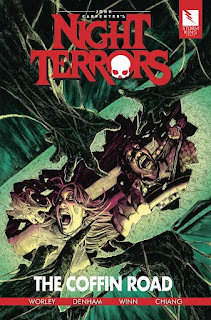
The Coffin Road is about a recovery driver who rescues a young woman stranded on a haunted stretch of road. They need to find their way out of the woods before dawn as they find themselves pursued by a malevolent crook-necked specter…

​Trevor Denham has done an incredible job on the art, and it was colorist Ryan Winn’s idea to light the whole thing like a Giallo. The story’s really a Sandman-esque dark fantasy and Trevor and Ryan have given it exactly the kind of woozy, dreamy atmosphere I was after.


TTL: And lastly, any words of advice for those who want to write licensed fiction?


AW: Here’s my boilerplate advice for writing anything: Read a lot, write a lot, and study a lot.

Study is crucial or you won’t get any better any time soon. You won’t understand where you’re going wrong. You’ll be more likely to get stuck in a loop, get frustrated and blocked. So what should you study?

  1. Language. That’s your grammar and syntax, your nuts and bolts. I’d highly recommend studying Sin & Syntax by Constance Hale.
  2. Form. Study the medium in which you’re writing, whether that’s prose, theatre, poetry, film, etc. Same goes for genre, whether you work in comedy, horror, autobiography, historical, etc. Learn the limitations and advantages of your form.
  3. Drama. Learn how scenes and characters work. Understand narrative structure. Everything I learned in this department came pretty much entirely from American screenwriting books!

In terms of writing licensed fiction or comics, I’m at a stage in my career where I’d probably say, ‘save something for yourself.’ Don’t give these companies everything you’ve got!

I’ve been writing licensed stories for fifteen years now and Coffin Road is the first thing I actually own! All the original concepts I’ve written, like Age of the Wolf and Dandridge for 2000 AD, are lost to me forever. I’ve given those children away for a paycheck, and I’m really feeling that loss these days.
Storm King/Alec Worley

I guess you can either become a hack and not care about what you write or who owns it. Or you can work hard and create characters that you love and can relate to, but there’s a cost to doing that too. Not only does it take longer (and the writer of licensed fiction needs to work fast). It can also weigh on the soul, especially when you get feedback from readers who only seem to want the same old thing they’re read a thousand times before.

The hard truth about professional writing is this: being in a position to write your own stories to a paying public is a privilege enjoyed by a miniscule proportion of the writing community. Yet that miniscule proportion is so very greatly publicized, which means a lot of people come to writing with very skewed optics.

The internet has opened up opportunities for writers to gain greater creative and financial independence, but those roads are just as lengthy, fraught and potentially soul-consuming. Writers who talk about their ‘brand’ or ‘content’ end up sounding like marketing executives, but that’s the game we all have to play now.

You’ve heard of the ‘1,000 True Fans’ theory, right? That if you can garner 1,000 true fans, that is, readers who’ll buy anything you put out, then you can make a living off what they might contribute to a monthly Patreon or whatever. I think that’s certainly true, but a writer would need to accumulate 10,000 generic fans/followers/regular readers in order to generate that 1,000-fan hardcore. And to get those kind of numbers, you have to spend all day marketing yourself on social media (which does its utmost to keep you hidden unless you’re paying them or giving yourself over to 24/7 addiction). And all this takes you away from you actually writing and getting better at it.

So what’s the answer? I honestly don’t know. I’m still working through it. I’ve started my Substack Agent of Weird in an attempt to at least focus my readership, get everyone in one place and hopefully cut through some of the smoke and mirrors perpetuated around writing (usually by writers trying to market themselves).

If you want to write professionally, you need to keep your feet on the ground, diversify your projects, that is, combine higher-paying gigs with lower-paying passion projects, and be good at what you do. Having gone through a lot of bad times (and put my loved ones through a lot of bad times too) throughout my writing career, I’m a bit of an evangelist about this stuff. I hate to think of other people going through the same rotten experience just for want of someone explaining how this (very self-obsessed, very cliquey, very middle-class) world actually works. At least, how it actually works for me.

The good news is publishers of licensed fiction are always looking for new writers and there’s usually a very clear path towards reaching them, even if that path is the dreaded slush pile. So…

  1. Be good at what you do
  2. Be professional
  3. Know what you’re getting into.

If there’s anyone out there struggling to see their way forward on any of this stuff, then please don’t hesitate to bang a comment on my Substack…

Thanks so much for having me on Tabletop Lair, Matt!

Thank you as well Alec, for taking the time out of your busy schedule to answer these questions! Follow him on his substack, website, and Linktree.

Friday, July 15, 2022

Don't use RPGs to fix other people's stories


One of my earliest roleplaying game campaigns is still a source of embarrassment for me. Back in those halcyon days of high school, I had finally convinced some friends to join a game, using a Mass Effect campaign to draw them in.

The first few sessions went well, though nothing particularly daring: saving a politically significant Salarian from pirates after he was trapped in his own vacation home and dealing with an uprising of renegade robots at a corporate testing ground.
 
Unfortunately, I got it in my head to try and fix Mass Effect 3’s famously contentious ending. Mercifully, most of the specifics are lost to time, though I remember some very poorly roleplayed video game companions showing up. I came up with a bizarrely spiritual plot involving all the “souls” of the allied synthetics killed in 3’s cataclysmic "Destroy" ending congregating in a mecha-like super Geth, to be later returned to their original states by a process I hadn’t actually figured out.
 
Not my finest moment as a game master, no matter how I cut it.
 
While the players at least claimed to enjoy it, even shortly afterwards I realized my error. I had shot down several of their

Wednesday, June 29, 2022

An interview with RPG commission artist Will Nunes

Will Nunes

If you've been involved with the Star Wars roleplaying game scene, odds are you've seen at least one of Will Nunes' beautiful character portraits. He was kind enough to answer a few questions for me recently.

The Tabletop Lair: How did you get into art and more specifically, the world of RPG commissions?

Will Nunes: I’ve always done art, and I attended UMass Dartmouth for a degree in Illustration. Drawing pictures for people always sounded more appealing than working in an office. As for RPG art, that just sort of happened organically - I would draw characters from my TTRPG groups and post them online, and as I was doing other commissions at the time, I ended up picking up some RPG commissions. People shared those and it lead to more!

Will Nunes

TTL: What are your main influences?

WN: Mike McCarthy, an artist on the Fable series of videogames, was super formative for me through high school and college, and though my art has drifted very far from that look, I always find myself going back to see what I can learn from his work. In general, J.C. Leyendecker also had a huge influence on my art.

TTL: What's your process for each commission?

WN: I get some info from the client, and start getting them sketches, focused on capturing the important elements they’ve mentioned in the description. Once they’re happy with the sketch, I can start on the finals, sending updates along the way.

TTL: What's your advice for someone looking to get into RPG commissions?

WN: Draw your own characters and share them in relevant subreddits/discords. In this space, especially, I find there’s no better advertisement than just having your work visible

Thursday, June 9, 2022

Enemies Unknown - A Warhammer Fantasy Roleplay: Old World Bestiary review


The art of Warhammer Fantasy Roleplay: Old World Bestiary, depicting a red robed Bright Wizard and an orange mohawk-d Dwarf slayer,  a bare flesh berserker, facing a monstrous horned reptile that takes up most of the background.

Warhammer Fantasy Roleplay: Old World Bestiary

Published by Cubicle 7 (Black Industries 2005)

Design and Writing by T.S. Luikart and Ian Sturrock

Development and Rules Design by Chris Pramas 

Warhammer Fantasy Roleplay 2nd edition's bestiary appropriately reflects the spirit of the game: familiar tropes from a murkier perspective. Patching up the core rulebook's lackluster adversary section, Old World Bestiary provides rules for most of the vicious and strange creatures that populate the tabletop wargame. 

A four horned, goat-headed, one-eyed beastman clad in skulls and makeshift armor.
Cubicle 7

In many ways it's a standard take on one of the classic RPG staples but the book is set apart by its framing. Divided between a player and game master section, the former is presented through an in-universe document, Perilous Beasts. An assortment of rumors and scholarly debate, with a healthy dose of ravings and hearsay, it collects what characters in the setting know about the beings inhabiting dark corners of the world.

Even the more authoritative sections are shrouded by uncertainty, with a letter at the end calling the entire work into question. 

It's a brilliant literary device and one that fits the lopsided, "Ratcatcher" tone of WFRP perfectly. Information that would be common knowledge to most players is often unclear at best to

Wednesday, April 27, 2022

How much background does a RPG character need?

In a sterile, bluish-white room is the long haired Snake Plissken, looking over at something unseen with clear disdain while he fiddles with a gadget. He has an eyepatch over his left eye and wears a rugged, brownish-tan leather jacket over a black top with a zipper off center to his collar bone..
Escape from New York


One of the more interesting quirks of director John Carpenter’s body of work is how little background most of his protagonists are given. Barring horror classic Halloween, there’s few flashbacks or monologues detailing personal histories for the characters, who are defined largely by their role in the story. They Live’s George Nada is the most obvious example - even down to his name - as he quite literally wanders into the events of the film.

That’s not to say Carpenter’s subjects are total enigmas. The presence of Kurt Russell’s beloved Snake Plissken in Escape from New York feels anything but accidental. In light of his heroics during World War 3, he’s brought in to save the President of a dystopian United States from the open air prison that was once New York City. 

Even with frequent allusions to prior escapades, such as a failed attempt to rob the Federal Reserve, Snake’s personal history and deeper motives are left unspoken.

Cryptic as he might be, audiences never assumed Snake simply leapt into being with one eye and a permanent cowl. Neuromancer scribe William Gibson once explained how, "I was intrigued by the exchange in one of the opening scenes where the Warden says to Snake 'You flew the Gullfire over Leningrad, didn't you?' It turns out to be just a throwaway line, but for a moment it worked like the best SF where a casual reference can imply a lot".

What, pray tell, does any of this have to do with roleplaying games? Well anyone who’s made a character, run a campaign, or dreamed longingly of doing either knows that an RPG character is more than just a bunch of numbers. 

A background is what gives the character a place in the world, a reason for their motivations,

Wednesday, April 13, 2022

Tall Tales - A Vaesen Review


A figure clutching a revolver and lantern, clad in a wide brim hat and leather duster, reveals a towering, horned creature looming behind a sigil covered stone in a dark, green forest.
Free League

Vaesen: Nordic Horror Roleplaying
Published by Free League Publishing
Lead Writer: Nils Hintze
Game Dircector: Nils Karlén
Illustrations and Original Concept: Johan Egerkrans

Swedish roleplaying game publisher Free League Publishing has left a lasting mark in an industry that's never been more crowded. Their output has been characterized by concise rulesets, outstanding production values, and atmosphere so strong it verges on being oppressive. That's perhaps best encapsulated by their indie darling MÖRK BORG, the ultra-dark fantasy apocalypse experience presented like an art zine.

Vaesen: Nordic Horror Roleplaying fits right in with Free League's repertoire. The players are Thursday's Children, those possessing the Sight that reveals the magical creatures surrounding them. Agitated by a rapidly industrializing and conflict riven 19th century Northern Europe, you oppose these "Vaesen" as members of the Society.

But the stories are true, with giants, fairies, and ash tree wives are as rugged as they are elusive. The methods of banishing them are arcane and obscure, and oftentimes the humans who lured them out might be just as responsible for the horror. 

Vaesen offers a familiar but respectably novel take on the monster centric side of horror RPGs, where Call of Cthulhu looms almost as large as its Elder Gods. The players are outgunned and riven by personal demons: when they join the Society, the headquarters is abandoned and its sole surviving member is in an asylum.

Saturday, March 19, 2022

Projection - A Vampire the Masquerade: The Hunters Hunted Review


The cover of The Hunters Hunted, a green marble bordered image of four heavily armed Vampire hunters discovering a trapdoor in a dimly lit manor. They're oblivious to the pair of red eyes observing them from a dark corner.
White Wolf

Vampire the Masquerade: The Hunters Hunted
White Wolf 1992
Written by Bill Bridges
Developed by Andrew Greenberg, Rob Hatch, and Sam Chupp


90s RPG phenomenon Vampire the Masquerade provided the means to play out the shadowy politicking and tragic tales of the undead. The 1992 supplement The Hunters Hunted followed up with options for the few humans seeking to destroy the vampires hiding in plain sight. This was curtly established with the book's frontspiece, depicting a hand using a disposable lighters to torch a rose, an allusion to Vampire's iconic cover art.

Hunters Hunted leans into the idea that the Kindred really are running the World of Darkness and actively making it worse. Even so, the book doesn't automatically give its errant humans the moral high ground. From the get go its established that even the best established hunters are working on incomplete information, filling in the gaps with their own biases. The motives presented are selfish to varying degrees, either driven by a personal grudge or a transparent desire for power. 

Hunters are unlikely to ever get close to the truly influential vampires, cutting down plenty of the more "human" ones without ever realizing they might even be serving the truly monstrous rulers of the night.

An interesting parallel is formed, where vampires themselves are undead creatures who thrive off of human society but the humans pursuing them become murderous pariahs during their quests. That dynamic is where Hunters Hunted excels, giving a better swipe at "who's the real monster" than most similar works.

All Walks of Life

Falling a dozen pages short of a hundred, The Hunters Hunted mainly offers new perspectives and story advice on running this kind of Vampire chronicle, with the mechanical side of things coming second. Which is to say, nothing new for White Wolf. 

A hand using a disposable lighter on a rose, surrounded by darkness.
White Wolf
The first chapter is an extended prose intro, offering one look into the world of vampire hunters, along with all the misconceptions and contradictions it entails.

Wednesday, February 23, 2022

Never Split the Party? Going Against Conventional Wisdom


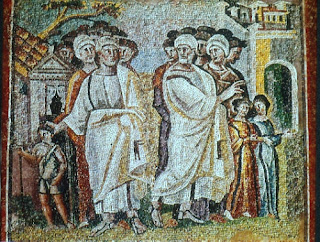
Two groups of biblical figures, one side led by Lot and the other Abraham, part ways in this 5th century mosaic.
The Parting of Lot and Abraham

"Never split the party!" A phrase bandied about so much that it now surrounds us in the form of algorithmically generated t-shirts and Facebook memes. It's good advice for roleplaying game neophytes. For a game master, running an RPG group is enough work as is and splitting the players up won't make thing easier.

I agree novice GMs should avoid splitting the party when possible. But what about those of us with a few more campaigns under our belts? Or a few dozen more? There are some stories you can only tell by letting the player characters walk their own paths, at least for a while.

I often see "Never split the party" framed solely in terms of combat. I suspect that has to do with Dungeons & Dragons dominating the medium. But that's not to say its exclusive to RPG's very own 800 pound gorilla. A recurring issue with Shadowrun is the "Pizza Problem," some variation of the idea that while Decker characters cavort in cyberspace,

Wednesday, February 9, 2022

Convergence - A Warhammer Fantasy Role Play: A Rough Night at the Three Feathers Review


The title card of "A Rough Night at the Three Feathers," with an inn sign depicting the establishment name and three parallel feather emblem worked into it.
Cubicle 7

The tavern is such a staple of fantasy roleplaying games that starting a campaign in one is a cliche at this point. But well before that introduction outstayed its welcome, published material for Warhammer Fantasy Roleplay 1st edition featured inns and taverns prominently. It makes sense, considering WFRP has always been standard fantasy at its core, though the gothic and British punk influences - with a healthy dose of dark humor - distinguished it immediately.

A Rought Night at the Three Feathers covers all those bases, a Graeme Davis penned, seven page adventure published in White Dwarf issue 94 and later reprinted in Apocrypha Now and The Restless Dead. Broadly there are some similarities to Jim Bambra's Night of Blood, even down to the naming conventions. Sharing the same basic premise, the module saw the adventurers retiring for the night only to get far more than they bargained for.

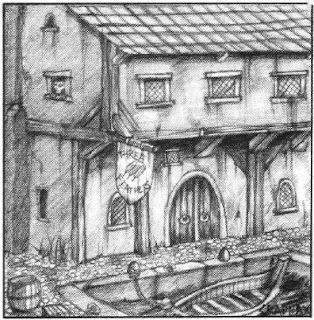
Exterior shot of a dingy, medieval fantasy flavored timbered inn with a three freathers sign near the door. A rowboat is tied up outsied it.
Cubicle 7
Night of Blood might have been relatively complex for its short length but A Rough Night at the Three Feathers is far more experimental, by Davis' own description. Though no mutants are on the characters' trail this time, the adventurers end up embroiled in a murder mystery, a noble's entourage, another visitor's extramarital affair, and of course, a Chaos cult.

Now where did my coin pouch go...

The scenario sports seven plotlines unfolding over the course of a single night, most with multiple personalities involved. A few can play out fully devoid of player involvement or the motives are left unknown to the players. 

Experimental is certainly the word for Rough Night, which more than lives up to its name with such a short page count and time frame. On its face it seems daunting to run. Admittedly I had to read it over four or five times before running it myself.

Despite what one might think, the short length is why this scenario works at all. Seven plotlines is a lot to keep track of, in part because they intersect so much. Rough Night even recommends dropping a few if needed. A longer page count would require too much back and forth,

Thursday, January 20, 2022

Do RPGs need intro prose?

A picture of an old, illuminated book behind a glass case.

It's something you don't really question after you handle enough roleplaying game books. In many RPG publications, preceding the often clunky "What is a Roleplaying Game?" section, you're greeted with a few pages of prose fiction. Sometimes it's a single page, sometimes it drags on interminably. The idea is obvious enough: giving players a taste of the game, its setting, its tone, and the kinds of stories it "should" tell.

But is that opening barrage of prose fiction really necessary? Is it even counterintuitive?

For a start, it's hard to generalize. The Call of Cthulhu 6th edition core book reprints the titular H.P. Lovecraft story before delving into mechanics for the author's stable of otherworldly creatures and how players interact with them.

Wednesday, January 5, 2022

Floor It - A Star Wars: Starships and Speeders Review


The black and yellow cover of Star Wars: Starships & Speeders. The bottom third shows the ragtag rebel feet clashing with H shaped TIE Fighters around the skeletal, under construction body of the second death star. The forest moon of Endor is below this battle.
Edge/Lucasfilm

Released two months into 2020, the compilation book Starships and Speeders is currently the last supplement published for Fantasy Flight Games' Star Wars roleplaying game system, which includes Edge of the Empire and Age of Rebellion. It's at least the last one FFG will publish, as Edge Studios now has the license, while fans await further reprints and hold out hope for new books.

In the mean time, we're left with Starships and Speeders. It's more or less what's on the tin: a collection of vehicle profiles for Game Masters to deploy and players to purchase in their games. For the most part, it collects existing stat blocks, though a few new additions have been made, mainly vehicles that showed up in Solo

It's an exhaustive selection, including nearly every ship from FFG's X-Wing wargame and a few new ones, like a luxury cruise liner. It's a decent mix of military and civilian vehicles, along with the vessels used by less savory elements. I would have liked some more Legends additions but I understand the further we get into the Disney era, the less likely that is. Starships and Speeders does leave a few nods here and there, like a reference to the Droids cartoon in the A-Wing background.

High above red clouds amid a yellow sky, the weathered, misshapen dome of the Millennium Falcon flees the pursuit of a TIE Fighter squadron
Edge Studios/Lucasfilm

Starships and Speeders isn't entirely a copy/paste job though, as iconic ships are given unique profiles. For example, there's the YT-1300 entry and then one specifically for the Millennium Falcon.

Tuesday, December 28, 2021

Know No Fear - A Warhammer 40,000: Space Marine (2011) Review


Titus, a space marine with black hair and a bulky suit of blue, gold trimmed power armored, rises up amid gothic ruins, clutching a mighty chainsaw-sword.
Games Workshop/Sega

Though the property grows increasingly prominent outside of wargaming miniature circles, Warhammer 40,000 doesn't have much to show for it video game wise. There are two big exceptions; Real Time Strategy classic Dawn of War and the third person, melee heavy shooter Space Marine.

The player controls Captain Titus of the Ultramarines, a chapter of the superhuman warriors known as Space Marines. His company is dispatched to the Forge World Graia, one of the foundries that supply the galaxy spanning Imperium's endless wars and now the site of a full scale Ork invasion. It's up to Titus to save Graia, now a ruined planet on the brink of defeat, though more dangerous foes may yet lie in wait.

Published by the now defunct THQ, Space Marine is one of the AA games that have largely gone extinct, overshadowed by gargantuan, big name undertakings and surprise Indie hits. And Space Marine is certainly middle of the road. 

A space marine firing his boxy boltgun into an approaching horde of green, axe wielding Orks amid ramshackle fortifications.
Games Workshop/Sega
There's nothing particularly revolutionary about the game, which plays very similarly to Gears of War, trading out cover mechanics for a regenerating shield and an emphasis on messily dispatching enemies with chainswords and similarly anachronistic melee weaponry.

Gameplay wise, Space Marine finds a nice balance between melee and raged options. Titus' main gun is the iconic bolter, which in this game is a compromise between the rocket powered explosive launcher of the lore and the lower caliber assault rifle seen in most adaptations. 

The game cleverly translates other tabletop weaponry into shooter staples. The anti-tank melta gun is akin to most shooters' shotguns and the lascannon serves as a sniper rifle best used for tankier ranged enemies. It's a good mix of weapons that are satisfying to use and benefit from some excellent sound design, adding to their existing weight. 

Melee weapons are less varied. Though the four options receive different animations, most feel like cosmetic changes outside of damage output, barring the appropriately unwieldy but capable Thunder Hammer.

Enemy wise there's even less of a mix, though that's partially because the source material leaves them in a tight spot, though the lack of character model variation draws attention to it. Combat mainly boils down to dispatching large waves of axe wielding enemies,

Thursday, November 18, 2021

Grimdark Reloaded - A Warhammer Fantasy Roleplay 2nd Edition Review


The Cover of WFRP 2nd edition. A group of hardened adventurers, led by a Dwarf Slayer with an orange mohawk are surrounded by Beastmen. Staked skeletons blot the murky skyline.
Cubicle 7

Developed by Green Ronin Publishing and published in 2005 by the short lived Black Industries, Warhammer Fantasy Roleplay 2nd Edition revived a grimdark classic. As far as second editions go, it's hard to beat. More than a simple clean up, the designers incorporated 19 years worth of improvements while making a game that was still recognizably WFRP

It's a familiar story, with humble adventurers, including the likes of rat catchers, woodsmen, and scribes, facing off against the horrors of a fantasy world threatened by the Dark Gods of Chaos. But even vicious adversaries like Orcs, Goblins, ratmen, daemons, and worse, often pale in comparison to plain old human cruelty and injustice.

Like its predecessor, WFRP 2E combines straightforward rules with a heavy atmosphere, defined by hard fought victories and often short lived characters.

Even with a successful 4th edition, WFRP 2E is still the go-to for those looking to explore the Old World. Personally, I don't think it's the automatic improvement over 1E many see it as. But I can't deny it's a strong game that kept the light burning for this grim world of perilous adventure.

All Too Familiar

It's easy to see 2E as mostly being a streamlined update of the original system. The core rulebook is only around 250 pages, compared to 1E's mighty tome, but both books offer a comparable amount of content. Most importantly, the career system is almost entirely intact and still takes up a big chunk of the page count.

A huge part of 1E's appeal was that the players were taking control of normal people in an unusual world. Even if Warhammer's fantasy tropes were very familiar, drawn from the pillars of the genre and real world history, WFRP stood out by exploring it with more relatable, mundane characters. 

An example career profile, depicting the mighty Rat Catcher, with a dead rodent covered back banner declaring him to be a "Rat Killer" as he leads his small but vicious dog forward.
Cubicle 7
Once again, players have to randomly generate their career from a list of dozens. The roster is largely the same, though more species specific options have been added for Elf, Dwarf, and Halfling players. A few have been modified or removed entirely. Bawd and labourer are missing in action, though I'm hardly sad to see the back of the tasteless "Slave Trader" advanced career. Beggar has been recast as the more scavenger like "Bone Picker." Torturer has been laughably sanitized into "Interrogator," without any changes to the actual career.

Through hard work, quick thinking, and dumb luck, players can see their adventurers end up as the likes of knights, Slayers, and other influential figures.

Wednesday, October 20, 2021

Halloween Tips for Running a Horror RPG


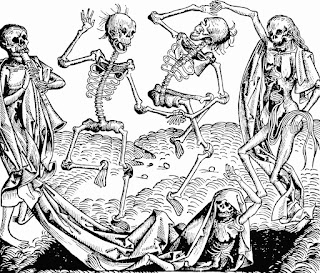
Michael Wolgemut's "The Dance of Death," depicting 4 reveling skeletons, 3 dancing and one playing a horn, as another of their number rises from an open grave, the horn blower using their death shroud as a garment.
Nuremberg Chronicle

A notion I see thrown around a lot is that roleplaying games just can't be scary. I used to think that myself. The logic is similar to the one applied to Co-op video games: it's too hard to be scared when you're goofing off with your friends. In hindsight, I think that spoke more to the games I was running and the systems I was playing.

Not only are there a host of RPG systems designed with horror specifically in mind, most notably Call of Cthulhu, I've found that this medium is in a unique position to embrace horror. After all, no other art form gives the audience the level of agency a roleplaying game does. Even video games are constrained by code and technical limitations, whereas the only limits of an RPG are those imposed by the table.

And that can allow for a damn scary story.


The Right Tools for the Job

Contrary to what you might expect, I don't think you necessarily need a horror system to run a good horror game. It certainly helps and that's where you should look first. But other systems can be used to bring the genre to your table, if you keep in mind what makes dedicated horror rulesets tick. My most successful horror game (which managed to give one of my players nightmares) was run in Star Wars: Age of Rebellion of all things. 
 
Drawing from the undmade Yuuzhan Vong Clone Wars episode and an enduring obsession with The X-Files, I had two Rebel PCs uncover an apparent conspiracy between the Rebel Alliance and an otherworldly, truly alien threat.

Or maybe it was all a plot by Imperial Intelligence to trick them into revealing military secrets.

Wednesday, October 13, 2021

Decades of Golden Demon - A COMPENDIUM Volume One Review


A picture of Compendium's Cover, emblazoned with a grinning yellow, blue eyed demon.
The Miniatures Compendium

Golden Demon has long been a major institution of the Warhammer hobby, a miniature painting competition first held at the 1987 Games Day, Games Workshop's premier convention in ages past. It was eventually untethered from the trademark event, which disappeared in the warp around 2014. Golden Demon lived on, though COVID has given us a 2 year hiatus.

A two page spread of Compendium, depicting a power armored figure clashing with a leaping, axe wielding cultist.
The Miniatures Compendium/David de Blas
It's hard to described the importance of Games Day, both personally and otherwise. It's especially hard perhaps because I've never been a particularly good painter. Golden Demon winning miniatures have been intimidating just as often as they've been inspiring. But I suppose that's part of the mystique.

Games Workshop injected plenty of pomp and ceremony into Golden Demon without making it too daunting for hobbyists: the titular leering demonic trophies became a symbol of a truly accomplished painter, with the best in show awarded the Slayer Sword, a steel replica weapon.

I certainly never imagined myself winning a Golden Demon, much less triumphantly holding the Slayer Sword aloft. Even so, trawling through the Golden Demon galleries as a neophyte hobbyist a decade ago is a memory I treasure dearly.

Tuesday, September 28, 2021

Dark Times - A Star Wars: Collapse of the Republic Review


The cover of Star Wars: Collapse of the Republic with newly inducted Sith Lord Anakin Skywalker, in dark robes with a lightsaber drawn.
Fantasy Flight Games/Lucasfilm

Star Wars: Collapse of the Republic

Fantasy Flight Games

Developed by Tim Cox with John Dunn, Lisa Farrel, Sterling Hershey, Keith Kappel, Monte Lin, and Jason Marker

Along with the three "Essential Collection" books, Collapse of the Republic was Fantasy Flight Games parting contribution to their Star Wars roleplaying game line. Intended as a companion to their previous Clone Wars sourcebook Rise of the Separatists, this book covers the latter half of the conflict as well as some of its stranger corners. The team does an excellent job justifying the decision to split the content into two separate books. Rise gives players what they need for adventure serial influenced heroics while Collapse offers a chance to live out the darkest moments of Star Wars history.

Player characters will need every advantage to survive these bleak, final days of the Old Republic, assuming they're willing to pay the toll taken to their health, finances, and very soul.

New Faces of War

While technically a separate supplement from the first Clone Wars book, Collapse still works best as a companion to it. Whereas Rise covers all the basic careers, gear, and NPCs, Collapse takes advantage of that previous work to introduce more unique and "veteran" options. 

2 new Jedi careers are offered, both rooted in seniority and experience; the very much Yoda influenced Master tree and the more martial General path, with talents that flirt with the Dark Side. The talent "Short Path to Power" is also introduced to resolve an oversight in Rise where players were locked out of building Jedi Knight's at character creation due to the Force Rank 2 restriction.

The focus on more experienced characters is also evident in the three new Clone careers: Veteran, ARC Trooper, and Clone Commander. To top it all off, Collapse introduces "Signature" abilities for Jedi and Clones.

A silver armored Death Watch Mandalorian in flight, fully armored with pistols drawn
Fantasy Flight Games/Lucasfilm

This book also provides more universal specializations, depicting some fan favorite and very specific roles. Mandalorians finally get a proper statline with Death Watch Warrior, sporting talents that make jetpack characters even more imposing but some emphasis on the more social side of the Mando'ade as well.

Which is to say, talents to enhance Coercion.

Nightsisters also emerge from the shadows, offering one of the more genuinely unique and mystical force user talent trees. The first (and only) true Separatist specialization arrives with Separatist Commander, easing the pass for some less explored perspectives. 

Collapse does run into a lot of very "similar" careers. You can make a thematic argument for the clone specializations being so similar but it's still notable how close

Tuesday, August 24, 2021

Know Thy Enemy - A Dark Heresy: Creatures Anathema Review


The cover of Dark Heresy: Creatures Anathema. A group of three Inquisitorial acolytes fire their guns at a towering, white and purple, tentacle faced Lictor, a monstrosity that grasps at a frightened soldier with red talons.
Cubicle 7

Warhammer 40,000 Dark Heresy: Creatures Anathema
Published by Cubicle 7

Bestiaries have always been my favorite kind of RPG supplement. But the best ones don’t just endlessly list stat blocks, instead offering interesting, complex enemies and a meaningful context to employ them in. Bestiaries for licensed settings come with further problems. Plenty just settle for statting out iconic foes. Unoriginality aside, it feels like they're withholding the more identifiable parts of a setting to sell off later.

Dark Heresy: Creatures Anathema is thankfully not that kind of bestiary. The 145-page book offers nightmarish adversaries for the players’ Inquisitorial Acolytes to overcome or succumb to. It finds a nice balance between bringing in recognizable tabletop elements, some old favorites, and some entirely new additions. Everything is rooted in the game’s personal corner of the Dark Millennium, the Calixis Sector.

That's partially accomplished through the short diary entries given to each enemy. Every entry is accompanied with the insights of Inquisitor Felroth Gelt, who’s on the classic track of hardliner to radical. He’s about as compelling as he is original. Which is to say, not at all. 

The Gelt passages are clumsy and repetitive, failing to define a descent we only catch glimpses of.

Wednesday, July 28, 2021

Bending the Rules - An Avatar Legends: The RPG Quickstart Review


The cover of Avatar: Legends. The avatar is at the center, the symbol of all four elements behind them. The left side is bald air nomad Aang and the left is water tribe sports star Korra. Their eyes glow with the shared power of the Avatar state.
Magpie Games

Avatar Legends: The RPG Quickstart

Designed by Brendan Conway, James Mendez Hodes, Marissa Kelly, Mark Diaz Truman, Miguel Ángel Espinoza, Sharang Biswas, Elizabeth Chaipraditkul, Yeonsoo Julian Kim, Daniel Kwan, and Sen-Foong Lim 

Published by Magpie Games 

When it comes to licensed RPGs, there's been a gaping, Avatar the Last Airbender shaped hole. The hit animated TV show follows Aang, the titular Avatar and reincarnating master of four elements, and his journey to bring peace to a world at war. The spectacle of element bending, along with the episodic format and strong character development, makes it ripe for a tabletop adaptation. 

Thankfully the wait will soon be over, because Magpie Games has announced Avatar Legends: The RPG. The company that published the critically acclaimed MASKS and Bluebeard's Bride, they recently released the free quickstart rules as a preview. It's a strong offering and shows a promising future for the game.

Like previous Magpie Games' publications, it uses the divisive Powered by the Apocalypse ruleset. I haven't had experience with it until now, but from what I've seen, many people refuse to play anything but and there's another vocal subset that want nothing to do with it.

Aang and his friends Katara, Sokka, and Momo hanging on tot the saddle of the Air Bison Appa for dear life as he makes a sharp turn near a mountain top.
Magpie Games
Going off of Avatar Legends, it's very much a storytelling driven approach to RPGs, and the experience is dependent on the group running it. There's not much to keep track of but it does take some getting used to how everything fits together.

Resolution is done with 2d6, with the relevant modifiers from your four Stats and other conditional factors. The Stats are in line with how we see the characters of Avatar solve their problems, consisting of Creativity, Focus, Harmony, and Passion. Rolling 1 to 6 is a failure, 7 to 9 is a "soft" hit, and 10+ is a full hit; a success and then some.

The game rarely gets more complicated than that, though there are two very interesting aspects that stick out to me. A character's negative emotional state is represented mechanically with one of five Conditions, such as Angry and Foolish. These make certain actions more difficult and require the player to act on those emotions to clear it. Rather appropriately for Avatar, the injury system also uses Conditions.

In combat, players aim to inflict Conditions without getting countered. Once a character ticks all five boxes, they're out of action. It fits the sort of stories told in this setting very well. Defeating a foe is just as much about emotionally overwhelming them as physically besting them.

In line with that, the core mechanic of the game is Balance. Players have two conflicting Principles. When they act towards a given Principle, it moves towards that and away from the other. Going too far on either end causes players to "lose Balance" and flee from a situation. Besides their own actions, players and NPCs alike can make rolls to tip another character's balance. Characters that manage to keep both their Principles in check can make unique actions after Advancing.

It's a brilliant mechanic, one that really captures not just the surface level aspects of Avatar but also its deeper themes.

The game as a whole does a good job with that, at least going off this preview. Magpie opting against dedicated rules for bending shows how they're approaching this. It's a galling prospect to make an Avatar game without its namesake abilities. In game, Bending is left largely cosmetic, though in such a light system being able to manipulate earth, air, wind, or fire certainly has some creative applications.

Korra, Bolin, and Mako in sports bending gear, using their respective elements: Water, Earth, and Fire. The audience and pitch fills the background.
Magpie Games
The lack of bending mechanics has already caused a lot of noise in RPG circles and Magpie felt the need to add a sidebar rationalizing the decision. Though I was taken aback at first, I ultimately agree with the decision after actually playing the game. 

The spectacle of bending is what drew most of us into Avatar but its philosophical and narrative foundation is what really made the show work. Having a D&D or Pathfinder spell style system bending would have frankly been miserable and they were right to put their efforts elsewhere.

Character Creation does seems short in options but rich in meaningful choices. Characters have a choice of six "Playbooks," blocks of stats and unique techniques that reflect each of the main Avatar cast's character archetypes. It's a good way to guide player's towards the kind of stories that make the show so memorable. While I think the way personality ties into each playstyle is interesting, I do wonder if it would box in how players can approach their characters.

Luckily, players have to come up with personal histories, specific goals, and connections with other player characters. This helps avoid the limitations that might come from the archetypical approach by ensuring every playbook has a different narrative approach, even if the broad traits and mechanics are set.

Players do have considerable agency in Avatar: Legends, despite certain limitations in character creations. Non-combat and combat moves are a small roster described in broad terms, once again with the main focus of adding or removing Conditions and altering Balance. The system encourages players and GMs to frame their rolls as developments in the narrative, rather than just actions or skill checks.

Avatar: Legends also gives players a lot of say in the actual premise of a campaign. The players and GM discuss the scope, era, focus, and even inciting incident of the campaign before it begins. It's a very communal effort and the game master section positions more as a player with unique responsibilities than some kind of overlord.

Aang propels himself at a ball of air past a statue of a beast with its mouth open in a mountainous setting. Sokka looks doubtful.
Magpie Games

Half the quickstart rules page count is taken up by the pre-written adventure "The Forbidden Scroll." The players are captured on the eve of Fire Lord Ozai's coronation but after being released by a defector, they must now escape the city before they are caught once more. It's a straightforward scenario with a range of options, many tailored to the pregenerated characters' backgrounds. It can be as quick or as drawn out as the table wants it to be, with a surprising amount of replayability.

Overall, it's a versatile little story with a few unique mechanics, like the clock tracking the festival events and the guards progress. If the rest of Magpie's Avatar output is on par with this, it's a very good sign.

The presentation of the quickstart rules is decent enough, though it's rife with misspellings. The rules, particularly Combat, are framed in a way that makes them seem more complicated than they actually are. Art wise, there's some great sheets for the actual game portions but the art consists of what looks like recycled promotional assets. And not very good ones at that.

There's still plenty left to explore in the final release, namely a proper NPC section, but Avatar Legends is a surprisingly complete publication, with an easy to learn system that authentically captures the setting.

Tuesday, June 15, 2021

Hellish Harvest - A Warhammer Fantasy Roleplay: Grapes of Wrath Review


The title card for GRAPES OF WRATH.

 Warhammer Fantasy Roleplay: Grapes of Wrath

By Carl Sargent with Derrick Norton 

Published by Games Workshop

Published in White Dwarf issue 98, Grapes of Wrath was intended to serve as "a prelude to The Power Behind the Throne and continuing The Enemy Within Campaign." However, this 18 page Warhammer Fantasy Roleplay adventure could easily be played independently or as a part of your own campaign, as the writer is quick to point out.

Set in the small but prosperous village of Pritzstock, a few miles away from the city of Middenheim, the adventurers discover that the villagers are being plagued by flying skulls on the eve of their annual grape harvest. Besides the physical danger posed by the skulls, the loss of the town's sole source of income is perhaps an even greater threat. The adventurers find themselves embroiled in the mystery of the skulls, which proves to be even more complicated than it first appears.

Grapes of Wrath follows the standard format for WFRP 1st edition adventures. The players are dropped into a colorful setting with a cast of dynamic characters, all of whom have their own agendas. A sort of sandbox approach is taken. certain events will happen no matter what, though ultimately the resolution comes down to how the players approach the situation. It even opens with a carriage crash, one of the most recognizable 1E hallmarks.

Sticking to the format is hardly a bad thing, considering this is WFRP 1E. Both the players and game masters are given plenty to play with, as most events can unfold a number of different ways. Even so, there's still a looming threat to keep players on track. 

In this case, it's dealing with the skulls before the harvest spoils and Pritzstock is ruined financially. A more practical and believable motive than a lot of fantasy plots.

Four skulls with glowing eyes, hovering outside of a cave. One of them has a horn sticking from the top of his skull.
Games Workshop
There's also an interesting cast of characters. Pritzstock's inhabitants prove to be stuck up and often unhelpful. The PCs main contact is the boisterous Bretonnian Henri-Philipe Rocheteau, mayor of Pritzstock, who struggles to control the situation as well as his personal life, all of which is harmed by his domineering personality.

There's plenty of ways for the player characters to get in trouble, a few of them far from the main plot. In one popular fantasy trope that doesn't make it into many RPGs, player characters can end up in a duel with the local noble if his love interest gets too involved with any of them.